Spiteria Vraciului
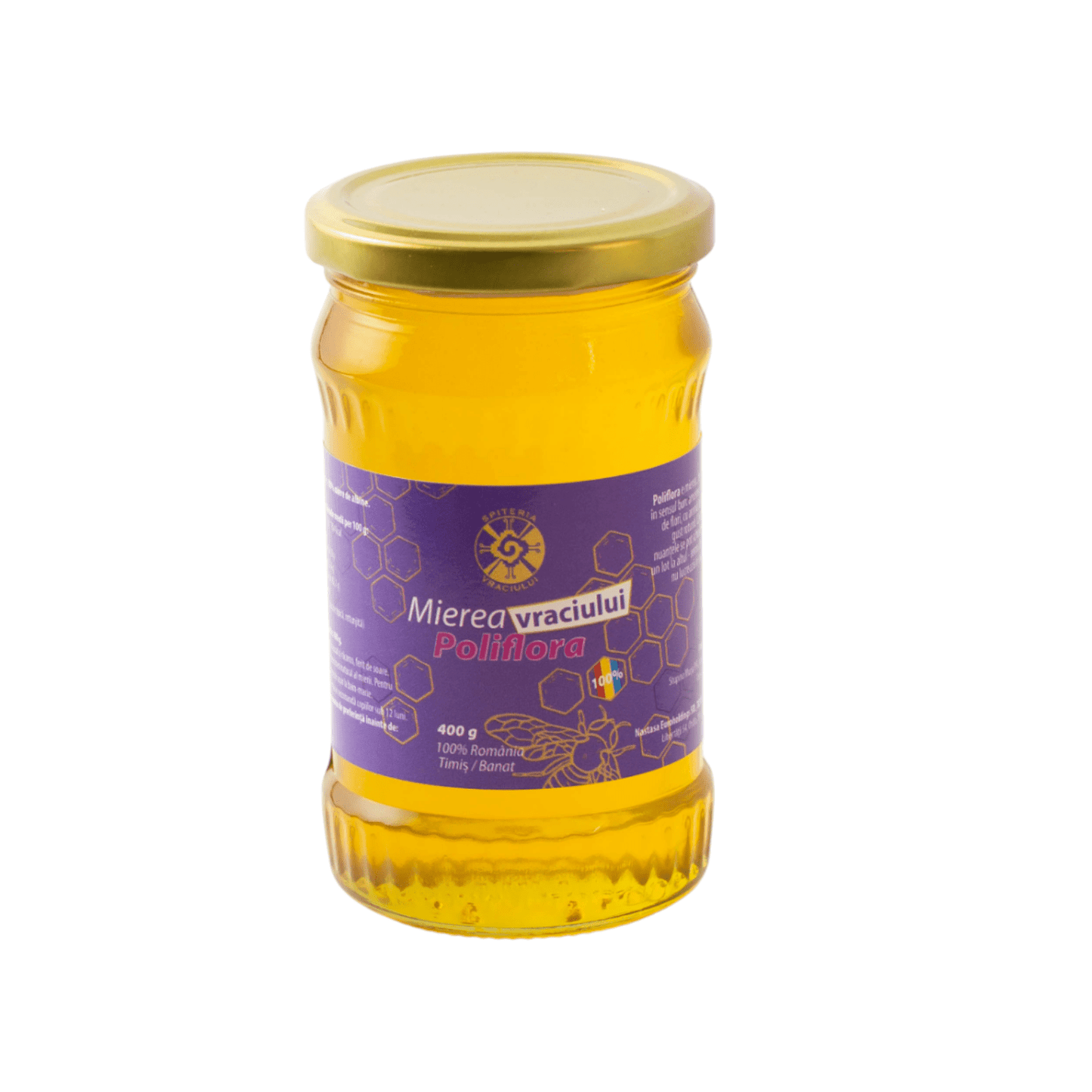
Natural Polyfloral Honey – The Healer's Honey | Romanian Raw Honey
Natural Polyfloral Honey – The Healer's Honey | Romanian Raw Honey
Couldn't load pickup availability
Polyfloral honey is authentic field honey — a natural blend created by bees from hundreds of flower species in Banat. Each jar is unique, reflecting the floral diversity of that summer, from that specific place. Variable by definition, unstandardized, with the aroma and taste that nature determined.
The Healer's Polyfloral Honey is not aggressively filtered and unpasteurized — it retains intact the pollen, active enzymes, and natural properties that fundamentally differentiate it from industrially processed honey.
Unlike monofloral honey (from a single plant), polyfloral honey brings the nutritional diversity of dozens of floral species — field, orchard, forest, and medicinal plants — into a single jar.
Recognized properties
- Honey is traditionally recognized for its natural energizing properties, due to rapidly and long-lasting absorbed carbohydrates (glucose and fructose)
- The natural antibacterial properties of honey are supported by the presence of inhibin (enzymatically produced hydrogen peroxide) and natural acidity (pH 3.5–4.5)
- Unpasteurized honey contains active enzymes (diastase, invertase, glucose oxidase) and all 18 essential amino acids
- Rich in flavonoids and phenolic acids with recognized antioxidant properties in traditional phytotherapy
- Traditionally used as a remedy for soothing throat irritations and upper respiratory tract discomfort
- Contains over 20 organic minerals: potassium, calcium, magnesium, iron, zinc, selenium, copper, and others
Authentic honey is not just liquid sugar — it is a complex food, created by bees through a unique enzymatic process.
🍬 Natural Sugars
82.4g per 100g. Fructose (38%) with slow absorption + glucose (31%) for immediate energy. Complete fuel, without the "crashes" of refined sugar.
🧬 Active Enzymes
Over 80 enzymes (diastase, invertase, glucose oxidase) — present only in unpasteurized honey. They are destroyed at temperatures above 40°C.
💎 Vitamins and Minerals
Complete B complex (B1–B9), vitamin C and K. Over 20 organic minerals with maximum absorption: iron, calcium, magnesium, zinc, selenium.
🛡️ Antioxidants and Antibacterials
Flavonoids (quercetin, apigenin), phenolic acids, and natural inhibin. Acidic environment (pH 3.5–4.5) which inhibits bacterial growth.
Honey is one of humanity's oldest natural foods and remedies. Its traditional uses are supported by a rich European ethnobotanical experience.
🥄 Direct Consumption · Doses
- Adults: 1–3 tablespoons per day
- Children (1–12 years): ½–1 teaspoon per day
- Athletes: 2–4 tablespoons (before/after exercise)
- Cold season: 1 teaspoon every 3–4 hours
🍵 In beverages
- Add after the tea has cooled below 40°C
- Warm milk — classic for sleep
- Water with lemon in the morning — detoxification
- Smoothies as a natural sweetener
🍞 In the kitchen
- On bread, in yogurt or cereals
- Natural glaze for meat
- Honey mustard salad dressing
- Sugar substitute: 75g honey = 100g sugar
🧖 External use
- Facial mask: 15–20 min, washed with warm water
- Hair mask with coconut oil, 30 min
- Local treatment for minor wounds and mild burns
- Brown sugar scrub for the body
Temperature
Do not add to hot liquids. Above 40°C, enzymes and vitamins are irreversibly destroyed.
Storage
15–25°C, dry place, away from direct light. Always use a clean and dry spoon.
Harvested exclusively from the Timiș / Banat area — fertile plains with exceptional floral diversity. Produced by local beekeepers, in small apiaries, with respect for bees and nature. Short, transparent circuit: from the apiary directly into the jar, without intermediaries and without industrial processing. Harvest period: summer (June–August). No pesticide or antibiotic residues.
⚕ Attention — temperature and diabetes
Do not heat honey above 40°C — high temperatures destroy enzymes and active properties. Individuals with diabetes should consult their doctor before consumption: honey has a lower glycemic index than refined sugar (55 vs 70), but it still affects blood sugar and requires monitoring.
Contraindications and precautions
- Do not administer to children under 12 months — risk of infant botulism (spores in honey can be dangerous for infants)
- Do not administer to people with allergies to honey or bee products
- Individuals with diabetes should consult their doctor and monitor blood sugar
- Individuals undergoing treatment for diabetes (insulin or oral antidiabetics) should consult their doctor — honey can affect blood sugar
- Pregnant women can consume honey normally; if in doubt, consult a doctor
- If signs of allergy appear (itching, hives, swelling in the mouth or throat, difficulty breathing) — stop immediately and contact a doctor
- Keep out of reach of children under 1 year old
- Store at 15–25°C, in a dry place, away from direct sunlight
Shari